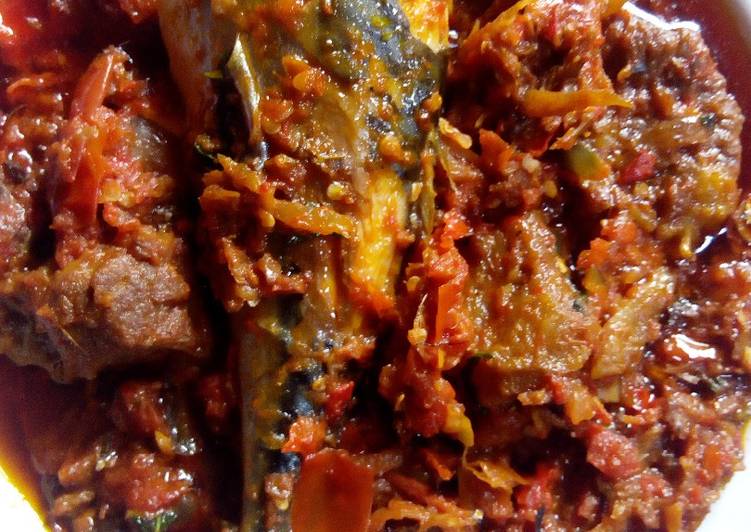
Native palm oil stew. Hey lovelies, I decided to share this very much requested palm oil stew recipe with you all. I hope you can give it a try! Palm oil is an edible vegetable oil derived from the mesocarp (reddish pulp) of the fruit of the oil palms, primarily the African oil palm Elaeis guineensis.
 The oil palms had always played a significant role in the history of Western Africa. Especially from the particular Elaeis At the heart of this chicken, peanut and palm oil stew is the moambe or mwambe sauce. The sauce is made with palm oil and serves as the basis for.
Hello everybody, it's me, Dave, welcome to my recipe site. Today, I'm gonna show you how to make a special dish, native palm oil stew. One of my favorites. For mine, I'm gonna make it a little bit unique. This will be really delicious.
Hey lovelies, I decided to share this very much requested palm oil stew recipe with you all. I hope you can give it a try! Palm oil is an edible vegetable oil derived from the mesocarp (reddish pulp) of the fruit of the oil palms, primarily the African oil palm Elaeis guineensis.
Native palm oil stew is one of the most popular of recent trending meals on earth. It is simple, it is fast, it tastes delicious. It is enjoyed by millions daily. They're fine and they look wonderful. Native palm oil stew is something which I've loved my whole life.
To get started with this recipe, we must prepare a few ingredients. You can cook native palm oil stew using 11 ingredients and 8 steps. Here is how you cook that.
The ingredients needed to make Native palm oil stew:
- {Take of Ripe fresh pepper, this us the major ingredient in the stew.
- {Make ready of Onions.
- {Make ready of Iru.
- {Prepare of Fresh tomatoes, very little.
- {Prepare of Blended crayfish.
- {Make ready of Palmoil.
- {Get of Dry fish.
- {Make ready of Fresh mackerel fish.
- {Take of Knor.
- {Make ready of Benny stock powder.
- {Make ready of Salt.
The Nigerian native Jollof Rice is also known as Iwuk Edesi or Palm oil Rice is a soul food at it's It is quite different from the popular nigerian Jollof Rice because this recipe uses Palm Oil and other […] one of those must-use ingredients when making African indigenous soups, sauces, and stews like the. Alapa is simply Palm Oil Stew. Once the stew has thickened up a bit, add a little extra palm oil. Dooney's Kitchen Tip: she does this to get back the original flavour of palm oil which has been lost from all the frying.
Steps to make Native palm oil stew:
- Roughly blend your fresh pepper, fresh tomatoes and onions then boil till dry.
- Season your dryfish with Benny and knor cubes and boil with little water to release its flavour.
- Heat your palm oil for few minutes, not completely bleached so as not to loose the fresh taste of palmoil.
- Add your sliced onions, crayfish and iru, frying your crayfish and iru helps to intensify their flavour.
- Add your roughly blended pepper mix and fry till almost dry.
- Add the boiled fish and stock then fry further till dry.
- Taste and adjust the taste, then bring down, is not a watery kind of stew, is more like a sauce..
- Serve with either rice or yam..
Am a good cook too but sometimes undermine our native dishes. When people speak about how to make Yoruba stew, they rather speak about how to add palm oil to it in order to achieve the authentic taste of this traditional Nigerian dish. While any other of Nigerian stews can be cooked with a random vegetable oil, this one requires palm oil and nothing else. Palm oil benefits your health when it's consumed in moderation. Despite its high saturated fat content, it's unlikely to raise your risk of heart disease.
So that's going to wrap this up with this exceptional food native palm oil stew recipe. Thanks so much for your time. I'm confident that you will make this at home. There's gonna be more interesting food at home recipes coming up. Remember to bookmark this page in your browser, and share it to your loved ones, colleague and friends. Thanks again for reading. Go on get cooking!
Tidak ada komentar:
Posting Komentar